In March 1945, Matta exhibited 14 paintings at Pierre Matisse's gallery, including Le Poête, self-portrait and together a portrait of André Breton. He also participated in several group exhibitions: Imagery of Chess, at the Julien Levy Gallery, European Artists in America, set up at the Whitney Museum, and finally the Third Biennal Exhibition - Acquisitions of Modern Art Society Members. Publication of Surrealism and Painting, with text by Breton La perle est gâtée à mes yeux...
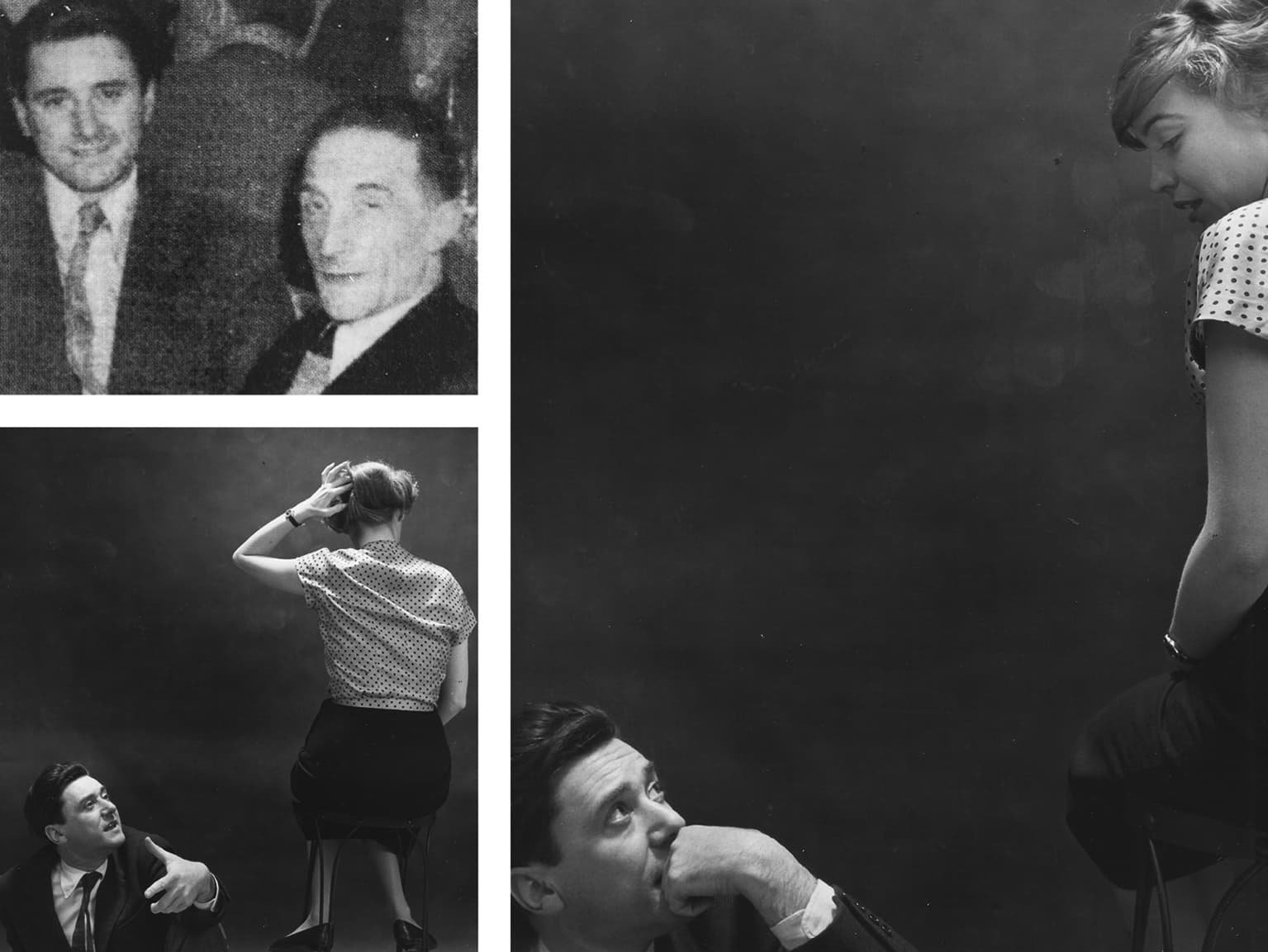 From the left: 1. Matta and Marcel Duchamp at farewell dinner for André Breton, New York, 1945, 2. Matta, New York, 3. Matta, New York.
In April 1946, he exhibited 12 works at the Pierre Matisse Gallery, including Être avec and The Splitting of the Ergo. “The characters are split. His characters refer to the revelation of an apocalyptic resulting from World War II.” (Marine Nedelec). On the occasion of the exhibition Marchel Duchamp would write in a short essay to be published four years later in the Anonymous Society catalog, “Although still young, Matta is the painter most profound of his generation.” With Être avec Matta goes to the other side of the mirror, his perception of the world shifts from a form of interiority to an expression of his belonging to a world of atrocities and injustices. Cahiers d'Art reproduces a small anthology of Matta's works.
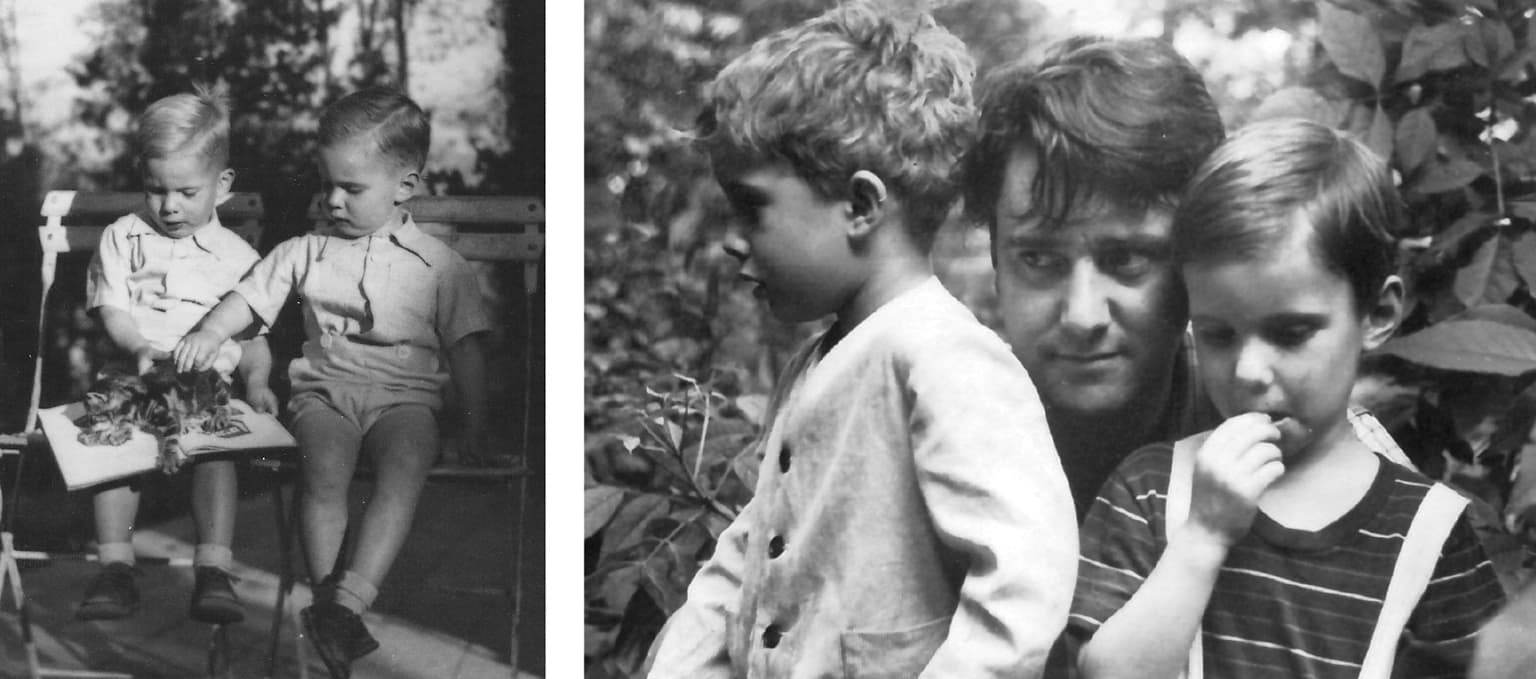 From the left: 1. Batan and Gordon, 2. Matta with his sons Batan (left) and Gordon (right)
In March, participates with Picasso, Matisse, Beckmann, Léger, Pollock, Lam, Siquieros in the exhibition Large Scale Modern Paintings at the Museum of Modern Art in New York. In July-August 1947, Matta took part in the exhibition “Le Surréalisme en 1947”, presented by André Breton and Marchel Duchamp, at the Maeght Gallery. The purpose of the exhibition is to “reaffirm a real cohesion of the group, emphasizing a certain surpassing of previous manifestations”. In the same summer, he held his first solo show in Paris, at Galerie René Drouin, with 32 works illustrating key steps in his evolution. André Breton, in his presentation of the exhibition, emphasizes the artist's originality, “Le Vitreur, Le Noeutre (the spelling is significant), Le Pelerin du dovute, L'Electricien... are as many incarnations of the artist. Beings full of style to whom goes, rightly, all of Matta's favor, gravitating, sovereign, thanks to their demonology, holders of all the vital powers so copiously bestowed on their author, as inventors of ways out communicate, ultimately to the work an exhilarating and contagious”.
In November, the Pierre Matisse Gallery brings the exhibition to New York, reducing the selection of works exhibited. At the end of the same year, Matta again creates the set design for Epiphanies, a work a play by Henri Pichette, staged by Georges Vitaly at the Petit Théatre des Noctambules.
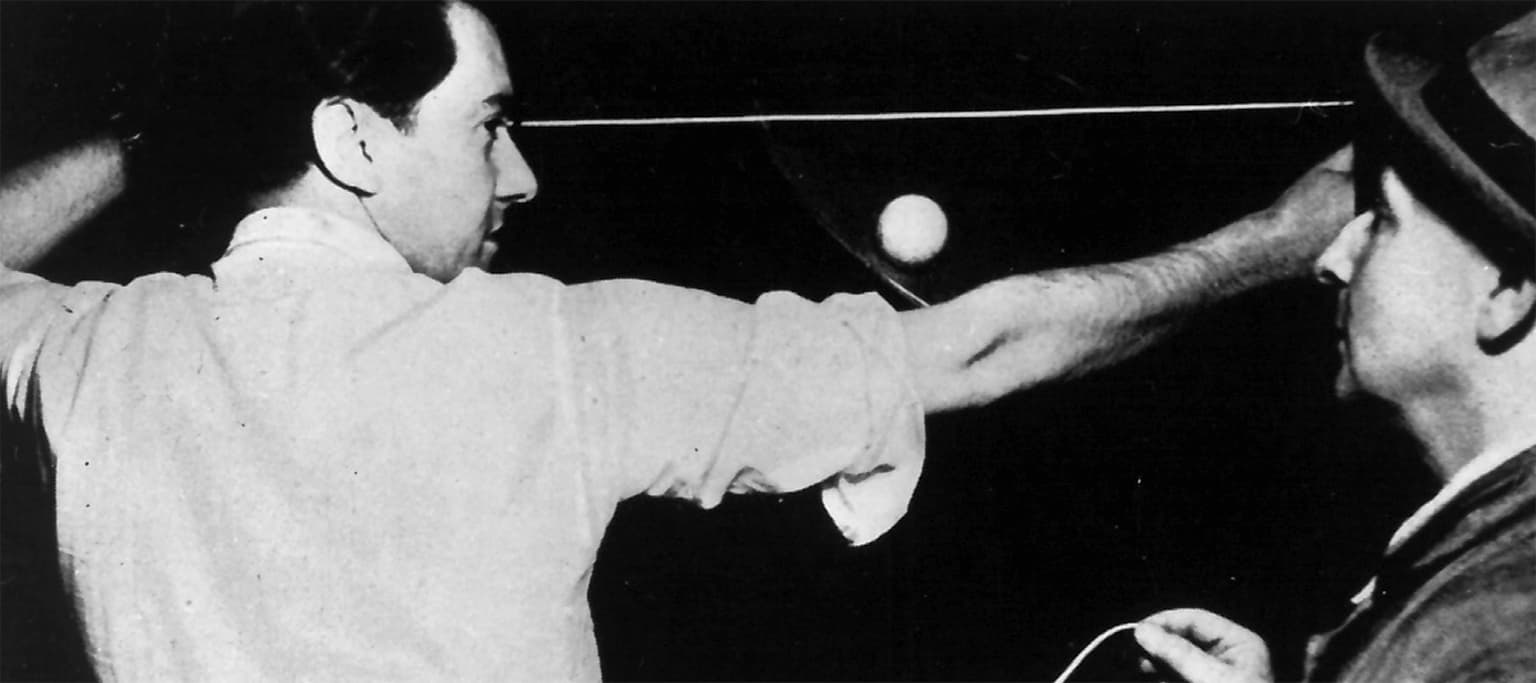 From the left: 1. Matta and Frederic Kiesler at the exhibition “Le Surréalisme” en 1947, Galerie Maeght, 1947.
In April 1948 he figures again in an exhibition organized by Pierre Matisse. Approaches Nicolas Carone. First selection at the Venice Biennale. Writes Infernallucinations for the book edited by Motherwell: Max Ernst Beyond Painting and Other Writings by the Artist and his Friend.
“The story is the story of man's various hallucinations: as soon as you think of certain characters influenced by this history-the devil, Venus, Christ, for example-it is clear that they owe their existence as historical figures in part to the fact that they were painted by men gifted with graphic hallucination”. (Nuevas conservaciones con Matta)
Contributes to Instead magazine, founded by Lionel Abel, to replace View magazine. At the end of the year he leaves New York for good, “as everything was becoming too much painting for me”, and leaves for Chile, where he stays for a few weeks, after an absence now of twenty years. On that occasion he publishes in the Santiago newspaper Pro Arte, one of his first manifesto writings, dated December 23 and entitled Réorganimacion de la Affectividad in which he insists on the “role of the artist revolutionary whose task is to discover new affective relationships between men”. He was expelled from the Surrealist group on October 25 of that year for “intellectual disqualification and moral ignominy”. The same will happen on November 8 to Alexandrian, Brauner, Tarnaud and Jouffroy, in solidarity with Matta.
In 1949, Matta settled in Rome where he would remain until 1954, continuing to go frequently to Paris. In May of that year, he exhibited again at the Galerie René Drouin.Early paintings on the theme of Le Cube ouvert. Resumes contact with Jorn, whom he had met in the Le Corbusier's studio. Pierre Mabille writes a text for Horizon magazine, “Matta and the New Reality”, in which he considers Matta a realist painter who gave the feeling of putting the viewer “at the center of the world”.
“As Matta was asked why ever he had chosen to move away to Rome in the postwar years, the artist replied that the city was lively at that moment, showed signs of awakening, which reached also those who, like him, had follwed the main art routes, first to Paris, then in the heart of New York, which was at the forefront of the painting of the time. Towards the end of the forties he had a long walk of life behind him. He had lived and worked in South America, France, Mexico, United States, Spain, England, and not a little of the cultural heritage of these countries got into his art. He was then in that human condition in which one reaches full maturity.”
Claudia Salaris, Tutte le strade portano a Roma
In January 1950, he exhibited for the first time in Italy, in Rome, at L'Obelisco Gallery. The invitation of the exhibition, titled “Phosphoresciamo”, reproduces a diagram by Matta, The Mir-Castin Tarot, which aims to denounce the mineralization of life.
In March he holds an exhibition at the Senior Gallery, presented by Emilio Villa.
In July he marries actress Angela Faranda in Paris. Becomes close to the Italian Communist Party and painters Renato Guttuso and Leonardo Cremonini. In New York, Sidney Janis organizes Young Painters, an exhibition held in the United States and in France comparing works by Matta and Gorky.
“Matta made arrangements with Irene Brin and Gaspero del Corso for exposing his paintings at the Obelisco Gallery, in via Sistina 146. The exhibition, opened on January 12 1950, was called Fosforesciamo, that is a neologism followed by four other neologisms: Erosamente, Castinando, Besuriamente, Veltrando.”
Claudia Salaris, Tutte le strade portano a Roma
Birth of son Pablo.
In January, exhibits at the ICA in London 12 works made in the past two years, including six in France and six in Italy. A poem composed of his maxims appears in the catalog: To put the hu-back in man or is easier than a camel. The Sidney Janis Gallery will resume the exhibition in April.
“Thought takes you no further than mathematics, but the ultimate understanding of the general and the particular is felt only in the heart. Art is not just an object of pleasure, but a transmission of a signal from a man who grasps the meaning of life.” (Translated from English by Antoine Jaccottet Roberto Matta, Letter-preface, Janis Gallery, 1951)
In May a new exhibition opens in New York, at the Hugo Gallery, featuring ten of his paintings, including Killers of Pigeon (Contro vosostros assassino de Palomas, now at the Musée Cantini in Marseille), made the previous year. He later participated in two major group exhibitions, “Annual American Exhibition. Painting and Sulpture,” in Chicago and the “American Vanguard Art for Paris Exhibition,” organized by Leo Castelli, an exchange between the Sidney Janis Gallery and the Galerie de France. The latter exhibition - with the new title “Regards sul la peinture amoricaine” - will remain open at the Galerie de France, from February 16 to March 15, '52, albeit with little success. Charles Estienne, in “Combat,” will speak of Gorky and Matta as painters not only American but “cosmopolitans”.
“Pablo was born when Neruda came to Rome from Chile on exhile, as a consequence of dictator Gabriel Gonzales Videla's persecution, together with his wife Delia del Carril, namely «Hormiga», the devoted ant who followed him during his wanderings. He hung around with painters, haunted the studio of Renato Guttuso at Villa Massimo, that of Carlo Levi, the world of Communists with Antonello Trombadori, and he was often guest at the house of via di Trasone. In 1952, he was expelled from Italy, as undesirable foreigner. However, as a result of intellectuals’ pressures, the decree was withdrawn and the poet could spend in Capri Island tha period, which has in recent years inspired Michael Radford's film Il postino with Massimo Trosi and Philippe Noiret. His friendship with Matta then dated back to many years: they made a journey together to Roche-Guyon, in France, before the painter left for New York.”
Claudia Salaris, Tutte le strade portano a Roma
In February, his work is exhibited at the Galerie de France as part of Regards sur la peinture américaine, a reprise of Leo Castelli and Sydney Janis' exhibitions in New York. In May, he participates in the exhibition L'oeuvre du vingtième siècle at the Musée national d'art moderne. Executes a fresco, now destroyed, for the E.U.R. (Universal Exhibition of Rome), a new neighborhood of Rome. Completes The Roses are Beautiful, in reaction to the Rosenbergs' trial on charges of espionage.
“At the time, Matta often went to Milan, where he was guest of painter and architect Ettore Sottsass, who belonged to MAC (Concrete Art Movement), and his wife Fernanda Pivano, who contributed to spread the American literature with her translations. He also saw Ennio Morlotti, this being an artist completely different from him, however, he appreciated the independence and deep thought of this, so that he passed a judge as follows: «Morlotti is a very intense, and profond man, one I love to have known as there are very few artists to day capable of a sustained effort upon themselves». Still in Milan, he met Lucio Fontana, Roberto Crippa, Gianni Dova, that belonged to the Spatialist Movement. Although he did not really join any Italian group, it must actually have been due to his architectural background that he seemed to be particularly in harmony with the trend promoted by Fontana and developed around the Galleria del Naviglio. This aimed at going beyond painting, sculpture, poetry, towards a total art, so introducing the idea of space as not only artistic-work-framing element, but also conceptual structure of creative act.”
Claudia Salaris, Tutte le strade portano a Roma
“It is about participating, being with, so that the world opens up and the other surrenders. Once we reach this point of restless questioning and conscious exaltation, we understand that Matta's paintings have significant moral significance.”
Max Clarac Sérou, “Continuous Space - Lived Space,” Location, 1953
In March 1953, he exhibited in New York at the Iolas Gallery, various works painted in Rome from 1949 to 1953. Referring to this exhibition, Matta will talk about the new subject of his painting, “dawn on the earth,” and of the “true soul, which is tenderness toward everything that lives.” In August of the same year, he exhibited in Venice at the Sala Napoleonica (an exhibition organized by Alain Jouffroy), and at the Cavallino Gallery. Alain Jouffroy on that occasion, in the “Cahiers d'Arte” speaks of “realism discovered” by Matta.
“The artist must not be content to show the impenetrability of the world.... He must create openings, give new access to reality, point to the possibilities of change, show in the midst of the torrent the stones on which one can jump....”
Roberto Matta, Napoleonic Hall catalog, 1953
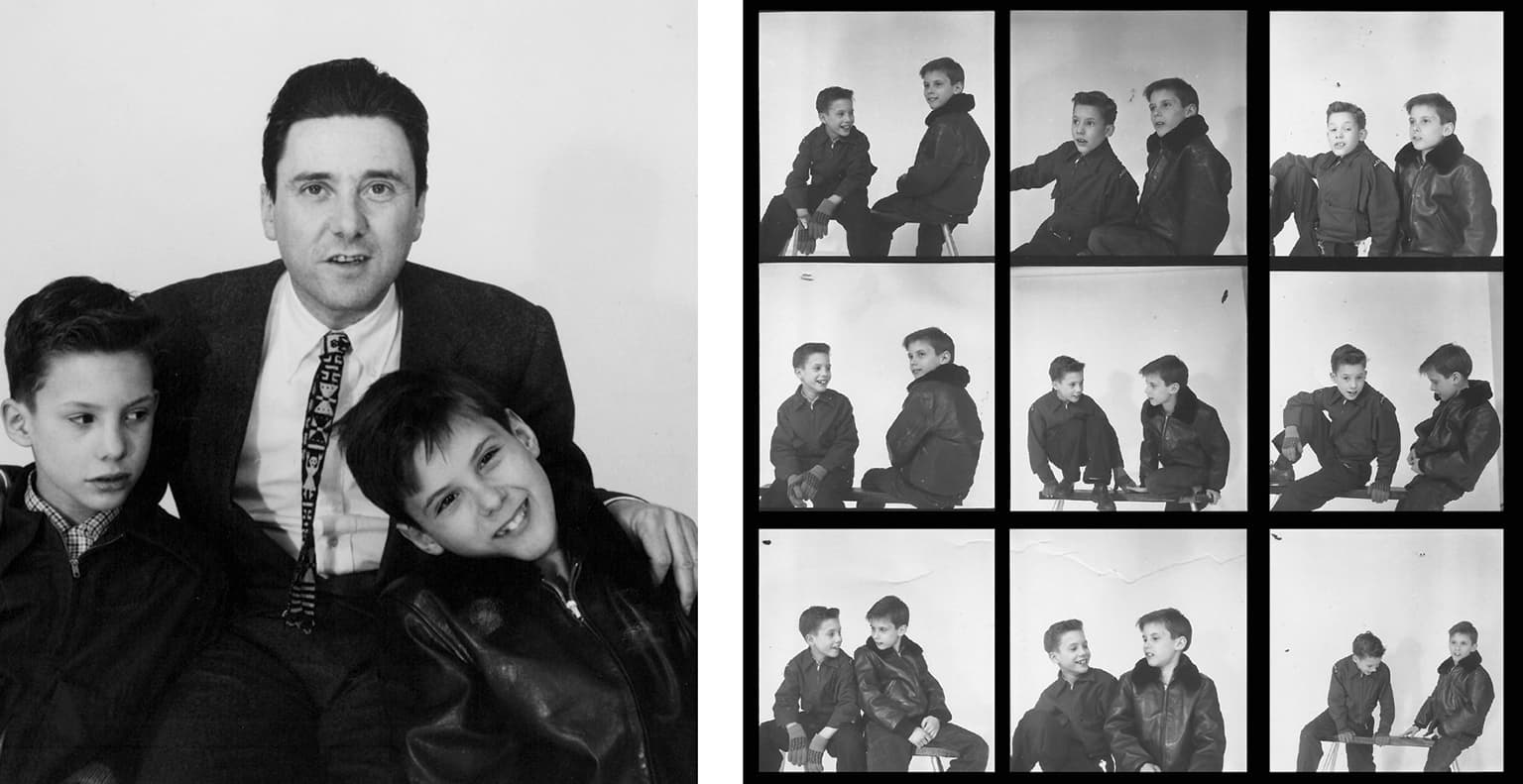 From the left: 1. Matta with his sons Batan (left) and Gordon (right), 1953, 2. Batan and Gordon
In February 1954, Matta held an exhibition at the Schneider Gallery in Rome, then, between May and June of that year, he exhibited 20 canvases at the Museo de Bellas Artes in Santiago. For that occasion, the painter returned to Peru and Chile. He then participates, for the first time, in the Salon de Mai, in which he later regularly takes part. He illustrates the poem “Attulima” by Alain Jouffroy. Publishes a manifesto for Reality magazine in the spring: “Art serves to procreate intuition.” Settles back in France, while frequently returning to Italy. He meets American Malitte Pope by whom he will have two children: Federica, born in 1955, and Ramuntcho, born in 1960.
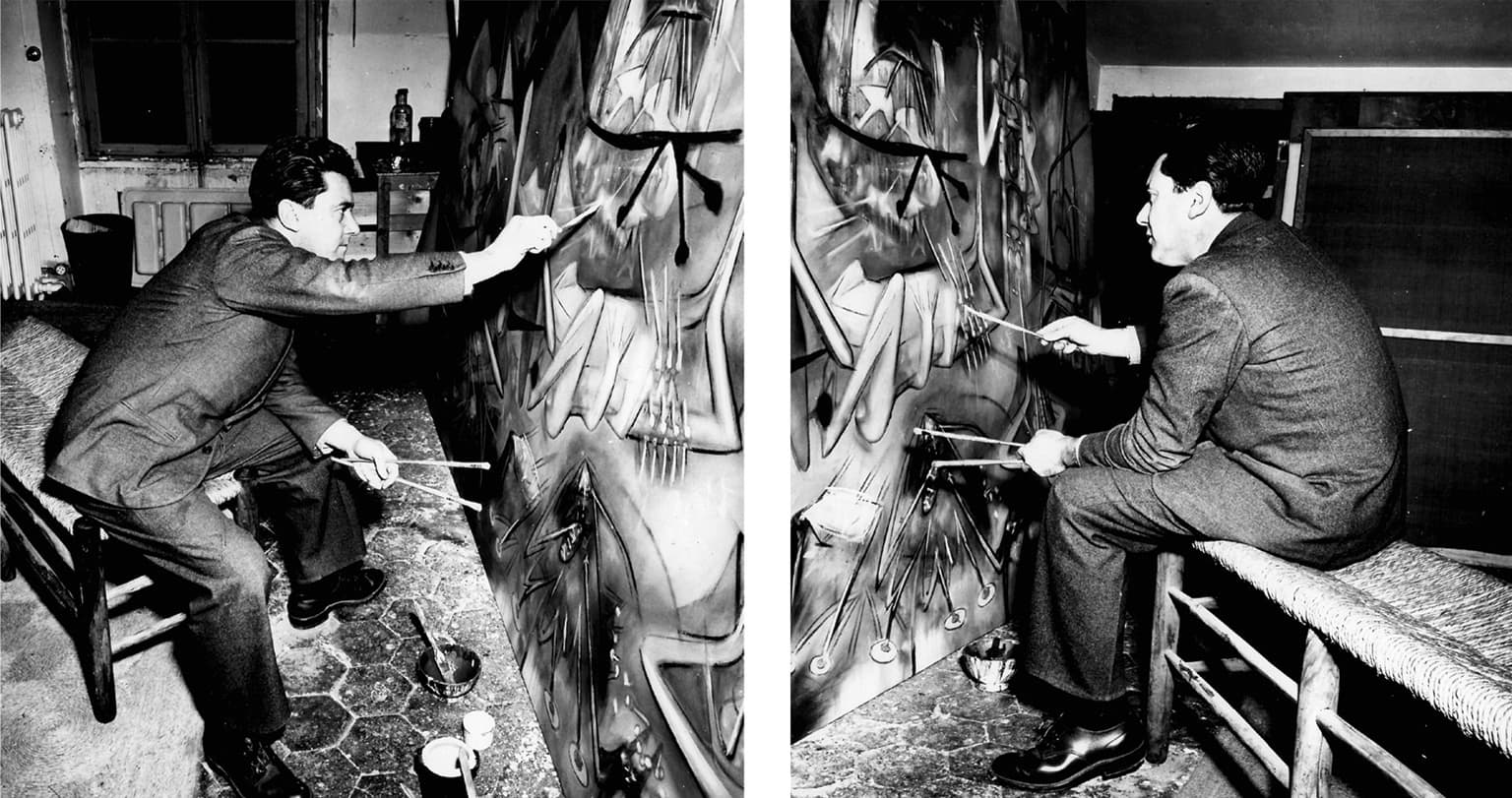 Matta in his studio on the Boulevard Saint Germain, Paris 1954